
Turn financial anxiety into a simple task list
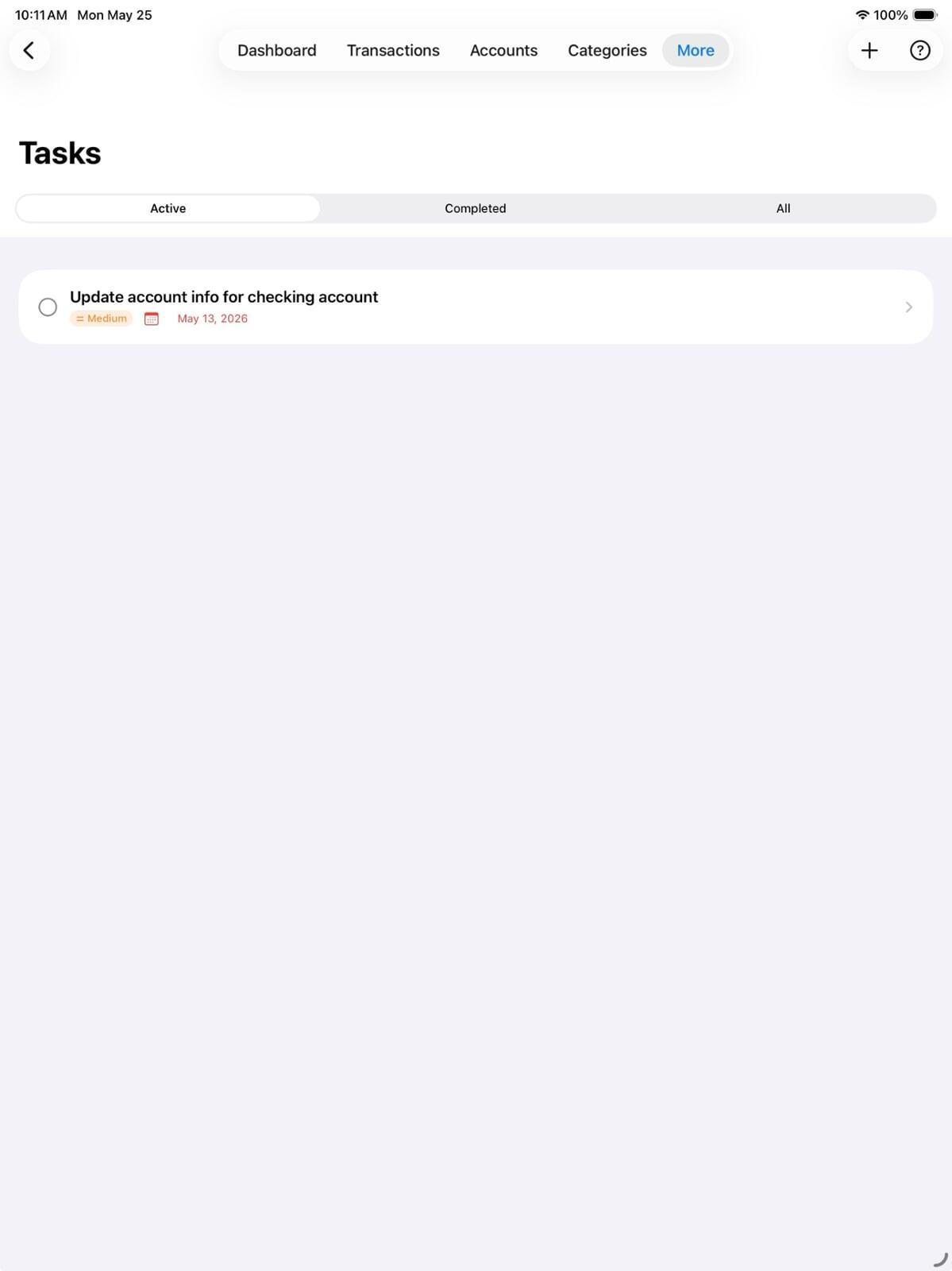
Money stress is rarely about a single concrete problem. It's a cloud — a nagging feeling that something is wrong, or will go wrong, without a clear shape. The most effective antidote is also the most boring: write it down. Every worry that you can name becomes a task you can act on, and every task you can act on stops consuming background mental energy.
The problem with vague financial dread
When you're anxious about money in an undefined way, your brain treats it as an open loop. Open loops demand attention. They surface at inconvenient moments — 2am, mid-meeting, in the shower — because your brain keeps checking "have we dealt with this yet?"
The answer is always no, because there's nothing concrete to deal with. The anxiety is about the unknown, not any specific thing.
Making the unknown concrete
The first step is a simple brain dump. Spend ten minutes writing every money-related thing that's in your head. Don't filter. Don't prioritise. Just write.
Common examples:
- I don't know if I can afford the holiday I booked
- I need to call the insurance company about that claim
- My car service is due and I don't know what it'll cost
- I should probably be putting more into savings
- I haven't filed my tax return yet and the deadline is coming
- I think I'm being overcharged on my phone bill
Notice that some of these are actions (call the insurance company) and some are worries masquerading as actions (I should probably be saving more). Both are valid. Both go on the list.
Converting worries to tasks
For each item, ask: what is the single next physical action? Not "sort out my finances" — that's not an action. The action is "open Pocketfuzz, look at last month's spending, identify the biggest category." One small, concrete step.
Then add it to Pocketfuzz as a task with a due date. The due date doesn't have to be today. It just has to be a real date — not "eventually."
The weekly review
Once a week — Friday morning works well for most people — open your task list and do two things:
- Close anything you completed. Mark it done. The small satisfaction of this is not nothing.
- Look at anything overdue. Either reschedule it with a real commitment, or delete it. If you've deferred a task three times, either you're never going to do it (delete it and stop pretending) or it's genuinely important and you need to block real time for it.
The review takes about ten minutes. Done consistently, it means you never go more than a week without touching your open financial loops. The anxiety has nowhere to live.
A sample starter task list
If you're starting from zero, here are ten tasks that are worth adding today:
- List all active subscriptions and their monthly cost
- Check current account balance vs. expected end-of-month balance
- Log last week's spending in Pocketfuzz
- Check insurance renewal date
- Set up one automatic saving transfer (even a small one)
- Review last month's biggest spending category
- Confirm upcoming large expenses for the next 3 months
- Check credit card statement for unrecognised charges
- Set a reminder for next tax filing deadline
- Do this again in one week
None of these requires financial expertise. All of them move you from vague dread toward a clear picture — and a clear picture, even an uncomfortable one, is always better than fog.